الجمعة، 6 أبريل 2012

Periodic table


The periodic table is a tabular display of the chemical elements, organized on the basis of their properties. Elements are presented in increasing atomic number. While rectangular in general outline, gaps are included in the rows or periods to keep elements with similar properties together, such as the halogens and the noble gases, in columns or groups, forming distinct rectangular areas orblocks. Because the periodic table accurately predicts the properties of various elements and the relations between properties, its use is widespread within chemistry, providing a useful framework for analysing chemical behavior, as well as in other sciences.
Although precursors exist, the current table is generally credited to Dmitri Mendeleev, who developed it in 1869 to illustrate periodic trends in the properties of the then-known elements; the layout has been refined and extended as new elements have been discovered and new theoretical models developed to explain chemical behavior. Mendeleev's presentation also predicted some properties of then-unknown elements expected to fill gaps in his arrangement; these predictions were proved correct when those elements were discovered and found to have properties close to the predictions.
All elements from atomic numbers 1 (hydrogen) to 118 (ununoctium) have been isolated. Of these, all up to californium exist naturally; the rest have only been artificially synthesised in laboratories, along with numerous synthetic radionuclides of naturally occurring elements. Production of elements beyond ununoctium is being pursued, with the question of how the periodic table may need to be modified to accommodate these elements being a matter of ongoing debate.


History

Main article: History of the periodic table


Dmitri Mendeleev
Previous attempts at systemization
In 1789, Antoine Lavoisier published a list of 33 chemical elements. Although Lavoisier grouped the elements into gases, metals, nonmetals, and earths,[1] chemists spent the following century searching for a more precise classification scheme. In 1829, Johann Wolfgang Döbereiner observed that many of the elements could be grouped into triads (groups of three) based on their chemical properties. Lithium, sodium, and potassium, for example, were grouped together as soft, reactive metals. Döbereiner also observed that, when arranged by atomic weight, the second member of each triad was roughly the average of the first and the third.[2] This became known as the Law of Triads.[3] German chemist Leopold Gmelin worked with this system, and by 1843 he had identified ten triads, three groups of four, and one group of five. Jean-Baptiste Dumas published work in 1857 describing relationships between various groups of metals. Although various chemists were able to identify relationships between small groups of elements, they had yet to build one scheme that encompassed them all.[2]
German chemist August Kekulé had observed in 1858 that carbon has a tendency to bond with other elements in a ratio of one to four. Methane, for example, has one carbon atom and four hydrogen atoms. This concept eventually became known as valency. In 1864, fellow German chemist Julius Lothar Meyer published a table of the 49 known elements arranged by valency. The table revealed that elements with similar properties often shared the same valency.[4]
English chemist John Newlands produced a series of papers in 1864 and 1865 that described his own classification of the elements: He noted that when listed in order of increasing atomic weight, similar physical and chemical properties recurred at intervals of eight, which he likened to the octaves of music.[5][6] This Law of Octaves, however, was ridiculed by his contemporaries, and the Chemical Society refused to publish his work.[7] Nonetheless, Newlands was able to draft an atomic table and use it to predict the existence of missing elements, such as germanium. The Chemical Society only acknowledged the significance of his discoveries some five years after they credited Mendeleev.[citation needed]
Mendeleev's table


Mendeleev's 1869 periodic table; note that his arrangement presents the periods vertically, and the groups horizontally
Russian chemistry professor Dmitri Ivanovich Mendeleev and German chemist Julius Lothar Meyer independently published their periodic tables in 1869 and 1870, respectively.[8] They both constructed their tables in a similar manner: By listing the elements in a row or column in order of atomic weight and starting a new row or column when the characteristics of the elements began to repeat.[9] The success of Mendeleev's table came from two decisions he made: The first was to leave gaps in the table when it seemed that the corresponding element had not yet been discovered.[10] Mendeleev was not the first chemist to do so, but he was the first to be recognized as using the trends in his periodic table to predict the properties of those missing elements, such as gallium and germanium.[11] The second decision was to occasionally ignore the order suggested by the atomic weights and switch adjacent elements, such as cobalt and nickel, to better classify them into chemical families. With the development of theories of atomic structure, it became apparent that Mendeleev had listed the elements in order of increasing atomic number.[12]
Further development
In the years following publication of Mendeleev's periodic table, the gaps he identified were filled as chemists discovered additional naturally occurring elements.[13] It is often stated that the last naturally occurring element to be discovered was francium (referred to by Mendeleev as eka-caesium) in 1939.[14] However, plutonium, produced synthetically in 1940, was identified in trace quantities as a naturally occurring primordial element in 1971.[15]
With the development of modern quantum mechanical theories of electron configurations within atoms, it became apparent that each row (or period) in the table corresponded to the filling of a quantum shell of electrons. In Mendeleev's original table, each period was the same length. However, because larger atoms have more electron sub-shells, modern tables have progressively longer periods further down the table.[16]
The production of various transuranic elements has expanded the periodic table significantly, the first of these being neptunium, synthesized in 1939.[17] Because many of the transuranic elements are highly unstable and decay quickly, they are challenging to detect and characterize when produced, and there have been controversies concerning the acceptance of competing discovery claims for some elements, requiring independent review to determine which party has priority, and hence naming rights. The most recently named element is copernicium (number 112), named on 19 February 2010;[18] the most recently accepted discoveries are ununquadium (114) and ununhexium (116), both accepted on 1 June 2011.[19]. In 2010, a joint Russia–US collaboration at Dubna, Moscow Oblast, Russia, claimed to have synthesized six atoms of ununseptium, making it the most recently claimed discovery.


الخميس، 5 أبريل 2012

Nobel Prize in Chemistry

The Nobel Prize in Chemistry (Swedish: Nobelpriset i kemi) is awarded annually by the Royal Swedish Academy of Sciences to scientists in the various fields of chemistry. It is one of the five Nobel Prizes established by the will of Alfred Nobel in 1895, awarded for outstanding contributions in chemistry, physics, literature, peace, and physiology or medicine. This award is administered by the Nobel Foundation and awarded by Royal Swedish Academy of Sciences on proposal of the Nobel Committee for Chemistry which consists of five members elected by Academy. The award is presented in Stockholm at an annual ceremony on December 10, the anniversary of Nobel's death. The first Nobel Prize in Chemistry was awarded in 1901 to Jacobus Henricus van 't Hoff, of the Netherlands, "for his discovery of the laws of chemical dynamics and osmotic pressure in solutions." The 2011 Nobel Prize was awarded to Dan Shechtman "for the discovery of quasicrystals".


Background

Alfred Nobel stipulated in his last will and testament that his money be used to create a series of prizes for those who confer the "greatest benefit on mankind" in physics, chemistry, peace, physiology or medicine, and literature.[2][3] Though Nobel wrote several wills during his lifetime, the last was written a little over a year before he died, and signed at the Swedish-Norwegian Club in Paris on 27 November 1895.[4][5] Nobel bequeathed 94% of his total assets, 31 million Swedish kronor (US$186 million in 2008), to establish and endow the five Nobel Prizes.[6] Due to the level of skepticism surrounding the will, it was not until April 26, 1897 that it was approved by the Storting (Norwegian Parliament).[7][8] The executors of his will were Ragnar Sohlman and Rudolf Lilljequist, who formed the Nobel Foundation to take care of Nobel's fortune and organise the prizes.
The members of the Norwegian Nobel Committee that were to award the Peace Prize were appointed shortly after the will was approved. The prize-awarding organisations followed: the Karolinska Institutet on June 7, the Swedish Academy on June 9, and the Royal Swedish Academy of Sciences on June 11.[9][10] The Nobel Foundation then reached an agreement on guidelines for how the Nobel Prize should be awarded. In 1900, the Nobel Foundation's newly created statutes were promulgated by King Oscar II.[8][11][12] According to Nobel's will, The Royal Swedish Academy of sciences were to award the Prize in Chemistry.[12]

Award ceremony

Main article: Nobel Prize
The committee and institution serving as the selection board for the prize typically announce the names of the laureates in October. The prize is then awarded at formal ceremonies held annually on December 10, the anniversary of Alfred Nobel's death. "The highlight of the Nobel Prize Award Ceremony in Stockholm is when each Nobel Laureate steps forward to receive the prize from the hands of His Majesty the King of Sweden. The Nobel Laureate receives three things: a diploma, a medal and a document confirming the prize amount" ("What the Nobel Laureates Receive"). Later the Nobel Banquet is held in Stockholm City Hall.
A maximum of three laureates and two different works may be selected. The award can be given to a maximum of three recipients per year. It consists of a gold medal, a diploma, and a cash grant.

Nomination and selection

Main article: Nobel Prize
Compared with some other prizes, the Nobel Prize nomination and selection process is long and rigorous, a key reason why it has become the most important prize in chemistry.[citation needed]
The Nobel Laureates in chemistry are selected by a committee that consists of five members elected by The Royal Swedish Academy of Sciences. In its first stage, several thousand people are asked to nominate candidates. These names are scrutinized and discussed by experts until only the winners remain. This slow and thorough process, is arguably what gives the prize its importance.
Forms, which amount to a personal and exclusive invitation, are sent to about three thousand selected individuals to invite them to submit nominations. The names of the nominees are never publicly announced, and neither are they told that they have been considered for the Prize. Nomination records are sealed for fifty years. In practice some nominees do become known. It is also common for publicists to make such a claim, founded or not.
The nominations are screened by committee, and a list is produced of approximately two hundred preliminary candidates. This list is forwarded to selected experts in the field. They remove all but approximately fifteen names. The committee submits a report with recommendations to the appropriate institution.
While posthumous nominations are not permitted, awards can occur if the individual died in the months between the nomination and the decision of the prize committee.
The award in chemistry requires the significance of achievements being recognized is "tested by time." In practice it means that the lag between the discovery and the award is typically on the order of 20 years and can be much longer. As a downside of this approach, not all scientists live long enough for their work to be recognized. Some important scientific discoveries are never considered for a Prize, as the discoverers may have died by the time the impact of their work is realized. For example, the contributions of Rosalind Franklin in discovering the structure of DNA: her x-ray crystallography citing the shape of DNA as a helix, were not realized until after her death, and the recipients of the prize were Watson, Crick, and Wilkins.

Prizes


A Chemistry Nobel Prize laureate earns a gold medal, a diploma bearing a citation, and a sum of money.[13] The amount of money awarded depends on the income of the Nobel Foundation that year.[14] If a prize is awarded to more than one laureate, the money is either split evenly among them or, for three laureates, it may be divided into a half and two quarters.[15]

Nobel Prize Medals
The Nobel Prize medals, minted by Myntverket[16] in Sweden and the Mint of Norway since 1902, are registered trademarks of the Nobel Foundation. Each medal feature an image of Alfred Nobel in left profile on the obverse (front side of the medal). The Nobel Prize medals for Physics, Chemistry, Physiology or Medicine, and Literature have identical obverses, showing the image of Alfred Nobel and the years of his birth and death (1833–1896). Nobel's portrait also appears on the obverse of the Nobel Peace Prize medal and the Medal for the Prize in Economics, but with a slightly different design.[17][18] The image on the reverse of a medal varies according to the institution awarding the prize. The reverse sides of the Nobel Prize medals for Chemistry and Physics share the same design.[19]

Nobel Prize Diplomas
Nobel laureates receive a Diploma directly from the hands of the King of Sweden. Each Diploma is uniquely designed by the prize-awarding institutions for the laureate that receives it.[20] The Diploma contains a picture and text which states the name of the laureate and normally a citation of why they received the prize. No Nobel Peace Prize has ever had a citation on its diplomas.[20]

Award Money
The laureate is also given a sum of money when they receive the Nobel Prize, in the form of a document confirming the amount awarded; in 2009 the monetary award was 10 million SEK (US$1.4 million).[14] The amount of prize money may differ depending on how much money the Nobel Foundation can award that year. If there are two winners in a particular category, the award grant is divided equally between the recipients. If there are three, the awarding committee has the option of dividing the grant equally, or awarding one-half to one recipient and one-quarter to each of the others.


Jābir ibn Hayyān


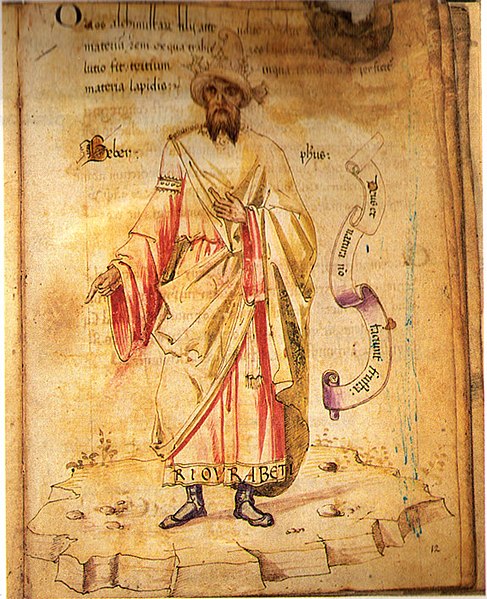
Abu Mūsā Jābir ibn Hayyān (al-Azdi / al-Kufi / al-Tusi / al-Sufi), often known simply as Geber, (Persian/Arabic: جابر بن حیان) (born c. 721 in Tus, Persia; died c. 815 in Kufa, Iraq)[6] was a prominent polymath: a chemist and alchemist, astronomer and astrologer, engineer, geographer, philosopher, physicist, and pharmacist and physician. Born and educated in Tus, he later traveled to Kufa. Jābir is held to have been the first practical alchemist.[7]
As early as the tenth century, the identity and exact corpus of works of Jābir was in dispute in Islamic circles.[8] His name was Latinized as "Geber" in the Christian West and in 13th century Europe an anonymous writer, usually referred to as Pseudo-Geber, produced alchemical and metallurgical writings under the pen-name Geber.


Biography


Early references

In 987 Ibn al-Nadim compiled the Kitab al-Fihrist which mentions Jabir as a spiritual leader and as a companion to Jafar as-Sadiq (he is not listed among the students of Jafar as-Sadiq but many of the writings of the Jabirian corpus are dedicated to Jafar as-Sadiq). In another reference al-Nadim reports that a group philosophers claimed Jabir was one of their own members. Another group, reported by al-Nadim, says only The Large Book of Mercy is genuine and that the rest are pseudographical. Their assertions are rejected by al-Nadim.[9] Joining al-Nadim in asserting a real Jabir; Ibn-Wahshiyya ("Jaber ibn Hayyn al-Sufi ...book on poison is a great work..") Rejecting a real Jabir; (the philosopher c.970) Abu Sulayman al-Mantiqi claims the real author is one al-Hasan ibn al-Nakad al-Mawili. 14th century critic of Arabic literature, Jamal al-Din ibn Nubata al-Misri declares all the writings attributed to Jabir doubtful.[10]

Life and background

Jabir was a Natural Philosopher who lived mostly in the 8th century, he was born in Tus, Khorasan, in Iran (Persia),[6] then ruled by the Umayyad Caliphate. Jabir in the classical sources has the been entitled differently as al-Azdi or al-Kufi or al-Tusi or al-Sufi.[11] There is a difference of opinion[11] as to whether he was an Arab from Kufa who lived in Khurasan or a Persian from Khorasan who later went to Kufa or whether he was, as some have suggested, of Syrian origin and later lived in Persia and Iraq.[11] His ethnic background is not clear,[11] and sources reference him as an Arab or a Persian.[1] In some sources, he is reported to have been the son of Hayyan al-Azdi, a pharmacist of the Arabian Azd tribe who emigrated from Yemen to Kufa (in present-day Iraq) during the Umayyad Caliphate.[12][13] while Henry Corbin believes Geber seems to have been a client of the 'Azd tribe.[14] Jābir became an alchemist at the court of Caliph Harun al-Rashid, for whom he wrote the Kitab al-Zuhra ("The Book of Venus", on "the noble art of alchemy").[citation needed] Hayyan had supported the Abbasid revolt against the Umayyads, and was sent by them to the province of Khorasan (present day Afghanistan and Iran) to gather support for their cause. He was eventually caught by the Ummayads and executed. His family fled to Yemen,[12][15] where Jābir grew up and studied the Quran, mathematics and other subjects.[12] Jābir's father's profession may have contributed greatly to his interest in alchemy.
After the Abbasids took power, Jābir went back to Kufa. He began his career practicing medicine, under the patronage of a Vizir (from the noble Persian family Barmakids) of Caliph Harun al-Rashid. His connections to the Barmakid cost him dearly in the end. When that family fell from grace in 803, Jābir was placed under house arrest in Kufa, where he remained until his death.
It has been asserted that Jābir was a student of the sixth Imam Ja'far al-Sadiq and Harbi al-Himyari,[5][8] however other scholars have questioned this theory.[16]

The Jabirian corpus


An illustration of the various experiments and instruments used by Jabir Ibn Hayyan.
In total, nearly 3,000 treatises and articles are credited to Jabir ibn Hayyan.[17] Following the pioneering work of Paul Kraus, who demonstrated that a corpus of some several hundred works ascribed to Jābir were probably a medley from different hands,[10][18] mostly dating to the late ninth and early tenth centuries, many scholars believe that many of these works consist of commentaries and additions by his followers,[citation needed] particularly of an Ismaili persuasion.[19]
The scope of the corpus is vast: cosmology, music, medicine, magic, biology, chemical technology, geometry, grammar, metaphysics, logic, artificial generation of living beings, along with astrological predictions, and symbolic Imâmî myths.[10]
The 112 Books dedicated to the Barmakids, viziers of Caliph Harun al-Rashid. This group includes the Arabic version of the Emerald Tablet, an ancient work that proved a recurring foundation of and source for alchemical operations. In the Middle Ages it was translated into Latin (Tabula Smaragdina) and widely diffused among European alchemists.
The Seventy Books, most of which were translated into Latin during the Middle Ages. This group includes the Kitab al-Zuhra ("Book of Venus") and the Kitab Al-Ahjar ("Book of Stones").
The Ten Books on Rectification, containing descriptions of alchemists such as Pythagoras, Socrates, Plato and Aristotle.
The Books on Balance; this group includes his most famous 'Theory of the balance in Nature'.
Jābir states in his Book of Stones (4:12) that "The purpose is to baffle and lead into error everyone except those whom God loves and provides for". His works seem to have been deliberately written in highly esoteric code (see steganography), so that only those who had been initiated into his alchemical school could understand them. It is therefore difficult at best for the modern reader to discern which aspects of Jābir's work are to be read as symbols (and what those symbols mean), and what is to be taken literally. Because his works rarely made overt sense, the term gibberish is believed to have originally referred to his writings (Hauck, p. 19).

People

Jābir's interest in alchemy was probably inspired by his teacher Ja'far as-Sadiq. When he used to talk about alchemy, he would say "my master Ja'far as-Sadiq taught me about calcium, evaporation, distillation and crystallization and everything I learned in alchemy was from my master Ja'far as-Sadiq." However, it has been proved that there is no connection between Jābir and Ja'far as-Sadiq [20] . It seems the claimed connection is based on traditional religious historians. Ibn Hayyan was deeply religious, and repeatedly emphasizes in his works that alchemy is possible only by subjugating oneself completely to the will of Allah and becoming a literal instrument of Allah on Earth, since the manipulation of reality is possible only for Allah. The Book of Stones prescribes long and elaborate sequences of specific prayers that must be performed without error alone in the desert before one can even consider alchemical experimentation.
Jābir professes to draw his inspiration from earlier writers, legendary and historic, on the subject.[21] In his writings, Jābir pays tribute to Egyptian and Greek alchemists Zosimos, Democritus, Hermes Trismegistus, Agathodaimon, but also Plato, Aristotle, Galen, Pythagoras, and Socrates as well as the commentators Alexander of Aphrodisias Simplicius, Porphyry and others.[10] A huge pseudo-epigraphic literature of alchemical books was composed in Arabic, among which the names of Persian authors also appear like Jāmāsb, Ostanes, Mani, testifying that alchemy-like operations on metals and other substances were also practiced in Persia. The great number of Persian technical names (zaybaq = mercury, nošāder = sal-ammoniac) also corroborates the idea of an important Iranian root of medieval alchemy.[22] Ibn al-Nadim reports a dialogue between Aristotle and Ostanes, the Persian alchemist of Achaemenid era, which is in Jabirian corpus under the title of Kitab Musahhaha Aristutalis.[23] Ruska had suggested that the Sasanian medical schools played an important role in the spread of interest in alchemy.[22] He emphasizes the long history of alchemy, "whose origin is Arius ... the first man who applied the first experiment on the [philosopher's] stone... and he declares that man possesses the ability to imitate the workings of Nature" (Nasr, Seyyed Hussein, Science and Civilization of Islam).


Theories

Jābir's alchemical investigations ostensibly revolved around the ultimate goal of takwin — the artificial creation of life. The Book of Stones includes several recipes for creating creatures such as scorpions, snakes, and even humans in a laboratory environment, which are subject to the control of their creator. What Jābir meant by these recipes is unknown.
Jābir's alchemical investigations were theoretically grounded in an elaborate numerology related to Pythagorean and Neoplatonic systems. The nature and properties of elements was defined through numeric values assigned the Arabic consonants present in their name, ultimately culminating in the number 17.
By Jabirs' time Aristotelian physics, had become Neoplatonic. Each Aristotelian element was composed of these qualities: fire was both hot and dry, earth, cold and dry, water cold and moist, and air, hot and moist. This came from the elementary qualities which are theoretical in nature plus substance. In metals two of these qualities were interior and two were exterior. For example, lead was cold and dry and gold was hot and moist. Thus, Jābir theorized, by rearranging the qualities of one metal, a different metal would result. Like Zosimos, Jabir believed this would require a catalyst, an al-iksir, the elusive elixir that would make this transformation possible — which in European alchemy became known as the philosopher's stone.[10]
According to Jabir's mercury-sulfur theory, metals differ from each in so far as they contain different proportions of the sulfur and mercury. These are not the elements that we know by those names, but certain principles to which those elements are the closest approximation in nature.[24] Based on Aristotle's "exhalation" theory the dry and moist exhalations become sulfur and mercury (sometimes called "sophic" or "philosophic" mercury and sulfur). The sulfur-mercury theory is first recorded in a 7th century work Secret of Creation credited (falsely) to Balinus (Apollonius of Tyana). This view becomes wide spread.[25] In the Book of Explanation Jabir says
the metals are all, in essence, composed of mercury combined and coagulated with sulphur [that has risen to it in earthy, smoke-like vapors]. They differ from one another only because of the difference of their accidental qualities, and this difference is due to the difference of their sulphur, which again is caused by a variation in the soils and in their positions with respect to the heat of the sun
Holmyard says that Jabir proves by experiment that these are not ordinary sulfur and mercury.[12]
The seeds of the modern classification of elements into metals and non-metals could be seen in his chemical nomenclature. He proposed three categories:[26]
"Spirits" which vaporise on heating, like arsenic (realgar, orpiment), camphor, mercury, sulfur, sal ammoniac, and ammonium chloride.
"Metals", like gold, silver, lead, tin, copper, iron, and khar-sini
Non-malleable substances, that can be converted into powders, such as stones.
The origins of the idea of chemical equivalents might be traced back to Jabir, in whose time it was recognized that "a certain quantity of acid is necessary in order to neutralize a given amount of base."[27][verification needed] Jābir also made important contributions to medicine, astronomy/astrology, and other sciences. Only a few of his books have been edited and published, and fewer still are available in translation.


Isaac Newton


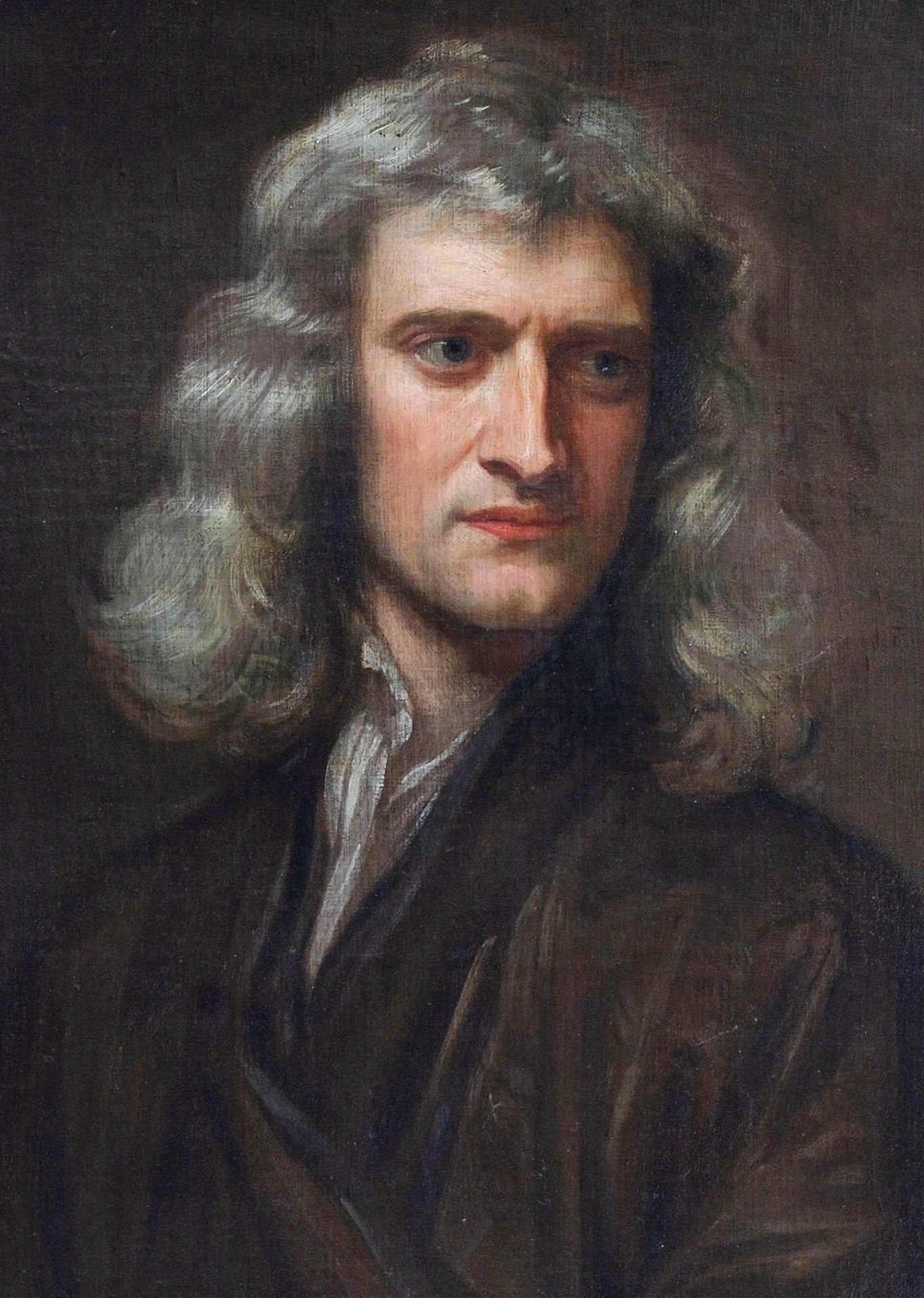
Sir Isaac Newton PRS (25 December 1642 – 20 March 1727 [NS: 4 January 1643 – 31 March 1727])[1] was an English physicist, mathematician, astronomer, natural philosopher, alchemist, and theologian, who has been "considered by many to be the greatest and most influential scientist who ever lived."[7] His monograph Philosophiæ Naturalis Principia Mathematica, published in 1687, lays the foundations for most of classical mechanics. In this work, Newton described universal gravitation and the three laws of motion, which dominated the scientific view of the physical universe for the next three centuries. Newton showed that the motions of objects on Earth and of celestial bodies are governed by the same set of natural laws, by demonstrating the consistency between Kepler's laws of planetary motion and his theory of gravitation, thus removing the last doubts about heliocentrism and advancing the Scientific Revolution.
The Principia is generally considered to be one of the most important scientific books ever written, due, independently, to the specific physical laws the work successfully described, and for the style of the work, which assisted in setting standards for scientific publication down to the present time. Newton built the first practical reflecting telescope[8] and developed a theory of colour based on the observation that a prism decomposes white light into the many colours that form the visible spectrum. He also formulated an empirical law of cooling and studied the speed of sound. In mathematics, Newton shares the credit with Gottfried Leibniz for the development of differential and integral calculus. He also demonstrated the generalised binomial theorem, developed Newton's method for approximating the roots of a function, and contributed to the study of power series. Newton's work on infinite series was inspired by Simon Stevin's decimals.[9] Newton was also highly religious. He was an unorthodox Christian, and wrote more on Biblical hermeneutics and occult studies than on the subjects of science and mathematics. Newton secretly rejected Trinitarianism, fearing to be accused of refusing holy orders.


Early life
Main article: Early life of Isaac Newton
Isaac Newton was born on what is retroactively considered 4 January 1643 [OS: 25 December 1642][1] at Woolsthorpe Manor in Woolsthorpe-by-Colsterworth, a hamlet in the county of Lincolnshire. At the time of Newton's birth, England had not adopted the Gregorian calendar and therefore his date of birth was recorded as Christmas Day, 25 December 1642. Newton was born three months after the death of his father, a prosperous farmer also named Isaac Newton. Born prematurely, he was a small child; his mother Hannah Ayscough reportedly said that he could have fit inside a quart mug (≈ 1.1 litres). When Newton was three, his mother remarried and went to live with her new husband, the Reverend Barnabus Smith, leaving her son in the care of his maternal grandmother, Margery Ayscough. The young Isaac disliked his stepfather and held some enmity towards his mother for marrying him, as revealed by this entry in a list of sins committed up to the age of 19: "Threatening my father and mother Smith to burn them and the house over them."[11] While Newton was once engaged in his late teens to a Miss Storey, he never married, being highly engrossed in his studies and work.[12][13][14]


Newton in a 1702 portrait by Godfrey Kneller


Isaac Newton (Bolton, Sarah K. Famous Men of Science. NY: Thomas Y. Crowell & Co., 1889)
From the age of about twelve until he was seventeen, Newton was educated at The King's School, Grantham (where his alleged signature can still be seen upon a library window sill). He was removed from school, and by October 1659, he was to be found at Woolsthorpe-by-Colsterworth, where his mother, widowed by now for a second time, attempted to make a farmer of him. He hated farming.[15] Henry Stokes, master at the King's School, persuaded his mother to send him back to school so that he might complete his education. Motivated partly by a desire for revenge against a schoolyard bully, he became the top-ranked student.[16] The Cambridge psychologist Simon Baron-Cohen considers it "fairly certain" that Newton suffered from Asperger syndrome.[17]
In June 1661, he was admitted to Trinity College, Cambridge as a sizar – a sort of work-study role.[18] At that time, the college's teachings were based on those of Aristotle,[19] whom Newton supplemented with modern philosophers, such as Descartes, and astronomers such as Copernicus, Galileo, and Kepler. In 1665, he discovered the generalised binomial theorem and began to develop a mathematical theory that later became infinitesimal calculus. Soon after Newton had obtained his degree in August 1665, the university temporarily closed as a precaution against the Great Plague. Although he had been undistinguished as a Cambridge student,[20] Newton's private studies at his home in Woolsthorpe over the subsequent two years saw the development of his theories on calculus,[21] optics and the law of gravitation. In 1667, he returned to Cambridge as a fellow of Trinity.[22] Fellows were required to become ordained priests, something Newton desired to avoid due to his unorthodox views. Luckily for Newton, there was no specific deadline for ordination and it could be postponed indefinitely. The problem became more severe later when Newton was elected for the prestigious Lucasian Chair. For such a significant appointment, ordaining normally could not be dodged. Nevertheless, Newton managed to avoid it by means of a special permission from Charles II (see "Middle years" section below).
Middle years
Mathematics
Newton's work has been said "to distinctly advance every branch of mathematics then studied".[23] His work on the subject usually referred to as fluxions or calculus, seen in a manuscript of October 1666, is now published among Newton's mathematical papers,[24] the manuscript De analysi per aequationes numero terminorum infinitas sent by Isaac Barrow to John Collins in June 1669, Barrow identified to Collins in August of that year as:[25]
Mr Newton, a fellow of our College, and very young ... but of an extraordinary genius and proficiency in these things.
Newton later became involved in a dispute with Leibniz over priority in the development of infinitesimal calculus. Most modern historians believe that Newton and Leibniz developed infinitesimal calculus independently, although with very different notations. Occasionally it has been suggested that Newton published almost nothing about it until 1693, and did not give a full account until 1704, while Leibniz began publishing a full account of his methods in 1684. (Leibniz's notation and "differential Method", nowadays recognised as much more convenient notations, were adopted by continental European mathematicians, and after 1820 or so, also by British mathematicians.) Such a suggestion, however, fails to notice the content of calculus which critics of Newton's time and modern times have pointed out in Book 1 of Newton's Principia itself (published 1687) and in its forerunner manuscripts, such as De motu corporum in gyrum ("On the motion of bodies in orbit"), of 1684. The Principia is not written in the language of calculus either as we know it or as Newton's (later) 'dot' notation would write it. But his work extensively uses an infinitesimal calculus in geometric form, based on limiting values of the ratios of vanishing small quantities: in the Principia itself Newton gave demonstration of this under the name of 'the method of first and last ratios'[26] and explained why he put his expositions in this form,[27] remarking also that 'hereby the same thing is performed as by the method of indivisibles'.
Because of this, the Principia has been called "a book dense with the theory and application of the infinitesimal calculus" in modern times[28] and "lequel est presque tout de ce calcul" ('nearly all of it is of this calculus') in Newton's time.[29] His use of methods involving "one or more orders of the infinitesimally small" is present in his De motu corporum in gyrum of 1684[30] and in his papers on motion "during the two decades preceding 1684".[31]
Newton had been reluctant to publish his calculus because he feared controversy and criticism.[32] He had a very close relationship with Swiss mathematician Nicolas Fatio de Duillier, who from the beginning was impressed by Newton's gravitational theory. In 1691, Duillier planned to prepare a new version of Newton's Principia, but never finished it. However, in 1693 the relationship between the two men changed. At the time, Duillier had also exchanged several letters with Leibniz.[33]
Starting in 1699, other members of the Royal Society (of which Newton was a member) accused Leibniz of plagiarism, and the dispute broke out in full force in 1711. The Royal Society proclaimed in a study that it was Newton who was the true discoverer and labelled Leibniz a fraud. This study was cast into doubt when it was later found that Newton himself wrote the study's concluding remarks on Leibniz. Thus began the bitter controversy which marred the lives of both Newton and Leibniz until the latter's death in 1716.[34]
Newton is generally credited with the generalised binomial theorem, valid for any exponent. He discovered Newton's identities, Newton's method, classified cubic plane curves (polynomials of degree three in two variables), made substantial contributions to the theory of finite differences, and was the first to use fractional indices and to employ coordinate geometry to derive solutions to Diophantine equations. He approximated partial sums of the harmonic series by logarithms (a precursor to Euler's summation formula), and was the first to use power series with confidence and to revert power series.
He was appointed Lucasian Professor of Mathematics in 1669 on Barrow's recommendation. In that day, any fellow of Cambridge or Oxford was required to become an ordained Anglican priest. However, the terms of the Lucasian professorship required that the holder not be active in the church (presumably so as to have more time for science). Newton argued that this should exempt him from the ordination requirement, and Charles II, whose permission was needed, accepted this argument. Thus a conflict between Newton's religious views and Anglican orthodoxy was averted.[35]
Optics


A replica of Newton's second Reflecting telescope that he presented to the Royal Society in 1672[36]
From 1670 to 1672, Newton lectured on optics.[37] During this period he investigated the refraction of light, demonstrating that a prism could decompose white light into a spectrum of colours, and that a lens and a second prism could recompose the multicoloured spectrum into white light.[38]
He also showed that the coloured light does not change its properties by separating out a coloured beam and shining it on various objects. Newton noted that regardless of whether it was reflected or scattered or transmitted, it stayed the same colour. Thus, he observed that colour is the result of objects interacting with already-coloured light rather than objects generating the colour themselves. This is known as Newton's theory of colour.[39]
From this work, he concluded that the lens of any refracting telescope would suffer from the dispersion of light into colours (chromatic aberration). As a proof of the concept, he constructed a telescope using a mirror as the objective to bypass that problem.[40] Building the design, the first known functional reflecting telescope, today known as a Newtonian telescope,[40] involved solving the problem of a suitable mirror material and shaping technique. Newton ground his own mirrors out of a custom composition of highly reflective speculum metal, using Newton's rings to judge the quality of the optics for his telescopes. In late 1668[41] he was able to produce this first reflecting telescope. In 1671, the Royal Society asked for a demonstration of his reflecting telescope.[42] Their interest encouraged him to publish his notes On Colour, which he later expanded into his Opticks. When Robert Hooke criticised some of Newton's ideas, Newton was so offended that he withdrew from public debate. Newton and Hooke had brief exchanges in 1679–80, when Hooke, appointed to manage the Royal Society's correspondence, opened up a correspondence intended to elicit contributions from Newton to Royal Society transactions,[43] which had the effect of stimulating Newton to work out a proof that the elliptical form of planetary orbits would result from a centripetal force inversely proportional to the square of the radius vector (see Newton's law of universal gravitation – History and De motu corporum in gyrum). But the two men remained generally on poor terms until Hooke's death.[44]
Newton argued that light is composed of particles or corpuscles, which were refracted by accelerating into a denser medium. He verged on soundlike waves to explain the repeated pattern of reflection and transmission by thin films (Opticks Bk.II, Props. 12), but still retained his theory of ‘fits’ that disposed corpuscles to be reflected or transmitted (Props.13). Later physicists instead favoured a purely wavelike explanation of light to account for the interference patterns, and the general phenomenon of diffraction. Today's quantum mechanics, photons and the idea of wave–particle duality bear only a minor resemblance to Newton's understanding of light.
In his Hypothesis of Light of 1675, Newton posited the existence of the ether to transmit forces between particles. The contact with the theosophist Henry More, revived his interest in alchemy. He replaced the ether with occult forces based on Hermetic ideas of attraction and repulsion between particles. John Maynard Keynes, who acquired many of Newton's writings on alchemy, stated that "Newton was not the first of the age of reason: He was the last of the magicians."[45] Newton's interest in alchemy cannot be isolated from his contributions to science.[5] This was at a time when there was no clear distinction between alchemy and science. Had he not relied on the occult idea of action at a distance, across a vacuum, he might not have developed his theory of gravity. (See also Isaac Newton's occult studies.)
In 1704, Newton published Opticks, in which he expounded his corpuscular theory of light. He considered light to be made up of extremely subtle corpuscles, that ordinary matter was made of grosser corpuscles and speculated that through a kind of alchemical transmutation "Are not gross Bodies and Light convertible into one another, ...and may not Bodies receive much of their Activity from the Particles of Light which enter their Composition?"[46] Newton also constructed a primitive form of a frictional electrostatic generator, using a glass globe (Optics, 8th Query).
In an article entitled "Newton, prisms, and the 'opticks' of tunable lasers[47] it is indicated that Newton in his book Opticks was the first to show a diagram using a prism as a beam expander. In the same book he describes, via diagrams, the use of multiple-prism arrays. Some 278 years after Newton's discussion, multiple-prism beam expanders became central to the development of narrow-linewidth tunable lasers. Also, the use of these prismatic beam expanders led to the multiple-prism dispersion theory.[47]
Mechanics and gravitation


Newton's own copy of his Principia, with hand-written corrections for the second edition
Further information: Writing of Principia Mathematica
In 1679, Newton returned to his work on (celestial) mechanics, i.e., gravitation and its effect on the orbits of planets, with reference to Kepler's laws of planetary motion. This followed stimulation by a brief exchange of letters in 1679–80 with Hooke, who had been appointed to manage the Royal Society's correspondence, and who opened a correspondence intended to elicit contributions from Newton to Royal Society transactions.[43] Newton's reawakening interest in astronomical matters received further stimulus by the appearance of a comet in the winter of 1680–1681, on which he corresponded with John Flamsteed.[48] After the exchanges with Hooke, Newton worked out a proof that the elliptical form of planetary orbits would result from a centripetal force inversely proportional to the square of the radius vector (see Newton's law of universal gravitation – History and De motu corporum in gyrum). Newton communicated his results to Edmond Halley and to the Royal Society in De motu corporum in gyrum, a tract written on about 9 sheets which was copied into the Royal Society's Register Book in December 1684.[49] This tract contained the nucleus that Newton developed and expanded to form the Principia.
The Principia was published on 5 July 1687 with encouragement and financial help from Edmond Halley. In this work, Newton stated the three universal laws of motion that enabled many of the advances of the Industrial Revolution which soon followed and were not to be improved upon for more than 200 years, and are still the underpinnings of the non-relativistic technologies of the modern world. He used the Latin word gravitas (weight) for the effect that would become known as gravity, and defined the law of universal gravitation.
In the same work, Newton presented a calculus-like method of geometrical analysis by 'first and last ratios', gave the first analytical determination (based on Boyle's law) of the speed of sound in air, inferred the oblateness of the spheroidal figure of the Earth, accounted for the precession of the equinoxes as a result of the Moon's gravitational attraction on the Earth's oblateness, initiated the gravitational study of the irregularities in the motion of the moon, provided a theory for the determination of the orbits of comets, and much more.
Newton made clear his heliocentric view of the solar system – developed in a somewhat modern way, because already in the mid-1680s he recognised the "deviation of the Sun" from the centre of gravity of the solar system.[50] For Newton, it was not precisely the centre of the Sun or any other body that could be considered at rest, but rather "the common centre of gravity of the Earth, the Sun and all the Planets is to be esteem'd the Centre of the World", and this centre of gravity "either is at rest or moves uniformly forward in a right line" (Newton adopted the "at rest" alternative in view of common consent that the centre, wherever it was, was at rest).[51]
Newton's postulate of an invisible force able to act over vast distances led to him being criticised for introducing "occult agencies" into science.[52] Later, in the second edition of the Principia (1713), Newton firmly rejected such criticisms in a concluding General Scholium, writing that it was enough that the phenomena implied a gravitational attraction, as they did; but they did not so far indicate its cause, and it was both unnecessary and improper to frame hypotheses of things that were not implied by the phenomena. (Here Newton used what became his famous expression Hypotheses non fingo).
With the Principia, Newton became internationally recognised.[53] He acquired a circle of admirers, including the Swiss-born mathematician Nicolas Fatio de Duillier, with whom he formed an intense relationship that lasted until 1693, when it abruptly ended, at the same time that Newton suffered a nervous breakdown.[54]
Later life


Isaac Newton in old age in 1712, portrait by Sir James Thornhill
Main article: Later life of Isaac Newton
In the 1690s, Newton wrote a number of religious tracts dealing with the literal interpretation of the Bible. Henry More's belief in the Universe and rejection of Cartesian dualism may have influenced Newton's religious ideas. A manuscript he sent to John Locke in which he disputed the existence of the Trinity was never published. Later works – The Chronology of Ancient Kingdoms Amended (1728) and Observations Upon the Prophecies of Daniel and the Apocalypse of St. John (1733) – were published after his death. He also devoted a great deal of time to alchemy (see above).
Newton was also a member of the Parliament of England from 1689 to 1690 and in 1701, but according to some accounts his only comments were to complain about a cold draught in the chamber and request that the window be closed.[55]
Newton moved to London to take up the post of warden of the Royal Mint in 1696, a position that he had obtained through the patronage of Charles Montagu, 1st Earl of Halifax, then Chancellor of the Exchequer. He took charge of England's great recoining, somewhat treading on the toes of Lord Lucas, Governor of the Tower (and securing the job of deputy comptroller of the temporary Chester branch for Edmond Halley). Newton became perhaps the best-known Master of the Mint upon the death of Thomas Neale in 1699, a position Newton held for the last 30 years of his life.[56][57] These appointments were intended as sinecures, but Newton took them seriously, retiring from his Cambridge duties in 1701, and exercising his power to reform the currency and punish clippers and counterfeiters. As Master of the Mint in 1717 in the "Law of Queen Anne" Newton moved the Pound Sterling de facto from the silver standard to the gold standard by setting the bimetallic relationship between gold coins and the silver penny in favour of gold. This caused silver sterling coin to be melted and shipped out of Britain. Newton was made President of the Royal Society in 1703 and an associate of the French Académie des Sciences. In his position at the Royal Society, Newton made an enemy of John Flamsteed, the Astronomer Royal, by prematurely publishing Flamsteed's Historia Coelestis Britannica, which Newton had used in his studies.[58]


Personal coat of arms of Sir Isaac Newton[59]
In April 1705, Queen Anne knighted Newton during a royal visit to Trinity College, Cambridge. The knighthood is likely to have been motivated by political considerations connected with the Parliamentary election in May 1705, rather than any recognition of Newton's scientific work or services as Master of the Mint.[60] Newton was the second scientist to be knighted, after Sir Francis Bacon.
Towards the end of his life, Newton took up residence at Cranbury Park, near Winchester with his niece and her husband, until his death in 1727.[61] His half-niece, Catherine Barton Conduitt,[62] served as his hostess in social affairs at his house on Jermyn Street in London; he was her "very loving Uncle,"[63] according to his letter to her when she was recovering from smallpox.
Newton died in his sleep in London on 31 March 1727 [OS: 20 March 1726],[1] and was buried in Westminster Abbey. Newton, a bachelor, had divested much of his estate to relatives during his last years, and died intestate. After his death, Newton's hair was examined and found to contain mercury, probably resulting from his alchemical pursuits. Mercury poisoning could explain Newton's eccentricity in late life.[64]
After death
Fame
French mathematician Joseph-Louis Lagrange often said that Newton was the greatest genius who ever lived, and once added that Newton was also "the most fortunate, for we cannot find more than once a system of the world to establish."[65] English poet Alexander Pope was moved by Newton's accomplishments to write the famous epitaph:
Nature and nature's laws lay hid in night;
God said "Let Newton be" and all was light.
Newton himself had been rather more modest of his own achievements, famously writing in a letter to Robert Hooke in February 1676:
If I have seen further it is by standing on the shoulders of giants.[66]
Two writers think that the above quote, written at a time when Newton and Hooke were in dispute over optical discoveries, was an oblique attack on Hooke (said to have been short and hunchbacked), rather than – or in addition to – a statement of modesty.[67][68] On the other hand, the widely known proverb about standing on the shoulders of giants published among others by 17th-century poet George Herbert (a former orator of the University of Cambridge and fellow of Trinity College) in his Jacula Prudentum (1651), had as its main point that "a dwarf on a giant's shoulders sees farther of the two", and so its effect as an analogy would place Newton himself rather than Hooke as the 'dwarf'.
In a later memoir, Newton wrote:
I do not know what I may appear to the world, but to myself I seem to have been only like a boy playing on the sea-shore, and diverting myself in now and then finding a smoother pebble or a prettier shell than ordinary, whilst the great ocean of truth lay all undiscovered before me.[69]
Albert Einstein kept a picture of Newton on his study wall alongside ones of Michael Faraday and James Clerk Maxwell.[70] Newton remains influential to today's scientists, as demonstrated by a 2005 survey of members of Britain's Royal Society (formerly headed by Newton) asking who had the greater effect on the history of science, Newton or Einstein. Royal Society scientists deemed Newton to have made the greater overall contribution.[71] In 1999, an opinion poll of 100 of today's leading physicists voted Einstein the "greatest physicist ever;" with Newton the runner-up, while a parallel survey of rank-and-file physicists by the site PhysicsWeb gave the top spot to Newton.[72]
Commemorations


Newton statue on display at the Oxford University Museum of Natural History
Newton's monument (1731) can be seen in Westminster Abbey, at the north of the entrance to the choir against the choir screen, near his tomb. It was executed by the sculptor Michael Rysbrack (1694–1770) in white and grey marble with design by the architect William Kent. The monument features a figure of Newton reclining on top of a sarcophagus, his right elbow resting on several of his great books and his left hand pointing to a scroll with a mathematical design. Above him is a pyramid and a celestial globe showing the signs of the Zodiac and the path of the comet of 1680. A relief panel depicts putti using instruments such as a telescope and prism.[73] The Latin inscription on the base translates as:
Here is buried Isaac Newton, Knight, who by a strength of mind almost divine, and mathematical principles peculiarly his own, explored the course and figures of the planets, the paths of comets, the tides of the sea, the dissimilarities in rays of light, and, what no other scholar has previously imagined, the properties of the colours thus produced. Diligent, sagacious and faithful, in his expositions of nature, antiquity and the holy Scriptures, he vindicated by his philosophy the majesty of God mighty and good, and expressed the simplicity of the Gospel in his manners. Mortals rejoice that there has existed such and so great an ornament of the human race! He was born on 25 December 1642, and died on 20 March 1726/7. — Translation from G.L. Smyth, The Monuments and Genii of St. Paul's Cathedral, and of Westminster Abbey (1826), ii, 703–4.[73]
From 1978 until 1988, an image of Newton designed by Harry Ecclestone appeared on Series D £1 banknotes issued by the Bank of England (the last £1 notes to be issued by the Bank of England). Newton was shown on the reverse of the notes holding a book and accompanied by a telescope, a prism and a map of the Solar System.[74]
A statue of Isaac Newton, looking at an apple at his feet, can be seen at the Oxford University Museum of Natural History.


Dmitri Mendeleev

Dmitri Ivanovich Mendeleev (also romanized Mendeleyev or Mendeleef; Russian: Дми́трий Ива́нович Менделе́ев  listen (help·info); 8 February [O.S. 27 January] 1834 – 2 February [O.S. 20 January] 1907) was a Russian chemist and inventor. He is credited as being the creator of the first version of the periodic table of elements. Using the table, he predicted the properties of elements yet to be discovered.


Early life


Dmitri Mendeleev
Mendeleev was born in the village of Verkhnie Aremzyani, near Tobolsk in Siberia, to Ivan Pavlovich Mendeleev and Maria Dmitrievna Mendeleev (née Kornilieva). His grandfather was Pavel Maximovich Sokolov, a priest of the Russian Orthodox Church from the Tver region.[1] Ivan, along with his brothers and sisters, obtained new family names while attending the theological seminary.[2]
Mendeleev is thought to be the youngest of either 11, 13, 14 or 17 siblings;[3] the exact number differs among sources.[4] His father was a teacher of fine arts, politics and philosophy. Unfortunately for the family's financial well being, his father became blind and lost his teaching position. His mother was forced to work and she restarted her family's abandoned glass factory. At the age of 13, after the passing of his father and the destruction of his mother's factory by fire, Mendeleev attended the Gymnasium in Tobolsk.
In 1849, the now poor Mendeleev family relocated to Saint Petersburg, where he entered the Main Pedagogical Institute in 1850. After graduation, he contracted tuberculosis, causing him to move to the Crimean Peninsula on the northern coast of the Black Sea in 1855. While there he became a science master of the Simferopol gymnasium №1. He returned with fully restored health to Saint Petersburg in 1857.
Later life

Between 1859 and 1861, he worked on the capillarity of liquids and the workings of the spectroscope in Heidelberg. In late August 1861 he wrote his first book on the spectroscope. On 4 April 1862 he had got engaged to Feozva Nikitichna Leshcheva, and they married on 27 April 1862 at Nikolaev Engineering Institute's church in Saint Petersburg (where he taught).[5] Mendeleev became a professor at the Saint Petersburg Technological Institute and Saint Petersburg State University in 1864 and 1865, respectively. In 1865 he became Doctor of Science for his dissertation "On the Combinations of Water with Alcohol". He achieved tenure in 1867, and by 1871 had transformed Saint Petersburg into an internationally recognized center for chemistry research. In 1876, he became obsessed with Anna Ivanova Popova and began courting her; in 1881 he proposed to her and threatened suicide if she refused. His divorce from Leshcheva was finalized one month after he had married Popova (on 2 April[6]) in early 1882. Even after the divorce, Mendeleev was technically a bigamist; the Russian Orthodox Church required at least seven years before lawful re-marriage. His divorce and the surrounding controversy contributed to his failure to be admitted to the Russian Academy of Sciences (despite his international fame by that time). His daughter from his second marriage, Lyubov, became the wife of the famous Russian poet Alexander Blok. His other children were son Vladimir (a sailor, he took part in the notable Eastern journey of Nicholas II) and daughter Olga, from his first marriage to Feozva, and son Ivan and a pair of twins from Anna.
Though Mendeleev was widely honored by scientific organizations all over Europe, including the Copley Medal from the Royal Society of London, he resigned from Saint Petersburg University on 17 August 1890.
In 1893, he was appointed Director of the Bureau of Weights and Measures. It was in this role that he was directed to formulate new state standards for the production of vodka. As a result of his work, in 1894 new standards for vodka were introduced into Russian law and all vodka had to be produced at 40% alcohol by volume.[7]
Mendeleev also investigated the composition of petroleum, and helped to found the first oil refinery in Russia. He recognized the importance of petroleum as a feedstock for petrochemicals. He is credited with a remark that burning petroleum as a fuel "would be akin to firing up a kitchen stove with bank notes."[8]
In 1905, Mendeleev was elected a member of the Royal Swedish Academy of Sciences. The following year the Nobel Committee for Chemistry recommended to the Swedish Academy to award the Nobel Prize in Chemistry for 1906 to Mendeleev for his discovery of the periodic system. The Chemistry Section of the Swedish Academy supported this recommendation. The Academy was then supposed to approve the Committee choice as it has done in almost every case. Unexpectedly, at the full meeting of the Academy, a dissenting member of the Nobel Committee, Peter Klason, proposed the candidacy of Henri Moissan whom he favored. Svante Arrhenius, although not a member of the Nobel Committee for Chemistry, had a great deal of influence in the Academy and also pressed for the rejection of Mendeleev, arguing that the periodic system was too old to acknowledge its discovery in 1906. According to the contemporaries, Arrhenius was motivated by the grudge he held against Mendeleev for his critique of Arrhenius's dissociation theory. After heated arguments, the majority of the Academy voted for Moissan. The attempts to nominate Mendeleev in 1907 were again frustrated by the absolute opposition of Arrhenius.[9]
In 1907, Mendeleev died at the age of 72 in Saint Petersburg from influenza. The crater Mendeleev on the Moon, as well as element number 101, the radioactive mendelevium, are named after him.


Magdi Yacoub


Magdi Yacoub


ir Magdi Habib Yacoub, FRS (Arabic: مجدى حبيب يعقوب‎ [ˈmæɡdi ħæˈbiːb jæʕˈʔuːb]; born 16 November 1935 in Bilbeis, Sharqia Governorate, Egypt), is Professor of Cardiothoracic Surgery at Imperial College London.[1][2][3][4]
Yacoub's major achievements may be summarised:
establishing heart transplantation in UK and becoming the world's leading transplant surgeon
establishing and becoming a master of the "Ross Procedure" or pulmonary autograft, including a randomised control trial
pioneering the modern arterial switch operation
promoting the use of left ventricular assist devices for the 'Bridge to Recovery' and establishing the largest experience in the world
establishing the Heart Science Centre, Magdi Yacoub Institute for research into the causes and treatment of cardiac disease
establishing the Chain of Hope Charity which provides cardiothoracic surgical care to the developing world
championing academic medicine, humanitarian surgery and becoming an example of a minority surgeon who flourished in institution-dominated field.
He was involved in the restart of UK heart transplantion in 1980 (there had been moratorium following the series of three performed by Donald Ross in 1968), carried out the first UK live lobe lung transplant and went on to perform more transplants than any other surgeon in the world. A 1980 patient, Derrick Morris, was Europe's longest surviving heart transplant recipient until his death in July 2005.


Early life and career

The son of a surgeon, Yacoub studied at Cairo University and qualified as a doctor in 1957. He reportedly said he decided to specialise in heart surgery after an aunt died of heart disease in her early 20s. He moved to Britain in 1962, then taught at The University of Chicago. He became a consultant cardiothoracic surgeon at Harefield Hospital in 1973.
[edit]The Harefield transplant programme

Under his leadership, the Harefield Hospital transplant programme began in 1980 and by the end of the decade he and his team had performed 1000 of the procedures and Harefield Hospital had become the leading UK transplant centre. During this period there was an increase in post-operative survival rates, a reduction in the recovery periods spent in isolation and in the financial cost of each procedure. In order to remove donor hearts, he would travel thousands of miles each year in small aircraft or helicopters. Most of his patients received treatment under the National Health Service, but some private foreign patients were also treated.
He was appointed professor at the National Heart and Lung Institute in 1986, and was involved in the development of the techniques of heart and heart-lung transplantation.
Recent work

Having retired from performing surgery for the National Health Service in 2001 at the age of 65, Yacoub continues to act as a high-profile consultant and ambassador for the benefits of transplant surgery. He continues to operate on children through his charity, The Chain of Hope.
In 2006 he briefly came out of retirement to advise on a complicated procedure which required removing a transplant heart from a patient whose own heart had recovered. The patient's original heart had not been removed during transplant surgery nearly a decade earlier in the hope it might recover.[5]
In April 2007, it was reported that a British medical research team led by Yacoub had grown part of a human heart valve, from stem cells, a first.[6]

Other activities and achievements

He is also notable for saving many lives by pioneering a technique for 'switching' the heart vessels of babies born with transposition of the great arteries, a congenital heart defect in which the two major vessels carrying blood out of the heart, the aorta and the pulmonary artery, are switched.
In 1995 he founded the UK charity Chain of Hope. This charity aims to provide children suffering from life-threatening disease with the corrective surgery and treatment to which they do not have access.
Among celebrities whose lives he extended was the comedian, Eric Morecambe. He was also known to have treated the famous Egyptian actor Omar Sharif, urging the latter to give up the cigarettes that had led to his heart attack.
In 2002 he was selected to spearhead a government recruitment drive for overseas doctors.
He has had a house named after him at The Petchey Academy which opened in September 2006.
He is one of few masters and teachers in the world of the highly technically demanding "Ross Procedure".
He established the Aswan Heart Center in April 2009 which is located in Upper Egypt in order to help children with heart problems find the right medication. [7]
]Honours and awards

1988 Bradshaw Lecture, Royal College of Physicians
1992 knighted by HM Queen Elizabeth II
1998 Texas Heart Institute Ray C. Fish Award for Scientific Achievement in Cardiovascular Disease
1999 Lifetime outstanding achievement award in recognition of contribution to medicine, Secretary of State for Health (UK)
2001 The Cleveland Clinic Foundation Heart Failure Summit : Kaufman Awardee
2003 Golden Hippocrates International Award for Excellence in Cardiac Surgery (Moscow)
WHO Prize for Humanitarian Services
2004 International Society for Heart & Lung Transplantation Lifetime Achievement Award
2006 European Society of Cardiology Gold Medal
2007 Daily Mirror Pride of Britain Lifetime Achievement Award
2007 Honorary citizenships of the city of Bergamo, Italy[8]
Curriculum vitae

1957 Medical Bachelor, Cairo (Egypt)
1964-1968 Rotating Senior Surgical Registrar, National Heart and Chest Hospitals, London
1969 Instructor and Assistant Professor, University of Chicago (USA)
1973-2001 Consultant Cardiac Surgeon, National Heart Hospital-Royal Brompton and Harefield National Health Service (NHS) Trust, London
1986-2006 British Heart Foundation Professor of Cardiothoracic Surgery
1986–present Professor of Cardiothoracic Surgery, National Heart and Lung Institute, Imperial College Faculty of Medicine
2001–present Founder and Director of Research of the Magdi Yacoub Research Institute, Harefield
2008–present Founder and Chair of Magdi Yacoub Research Network, London
2010–present Co-Chair and Research Director of Qatar Cardiovascular Research Center, Doha, Qatar

Ahmed Zewail

Ahmed Hassan Zewail (Arabic: أحمد حسن زويل‎, IPA: [ˈæħmæd ˈħæsæn zeˈweːl]; born February 26, 1946) is an Egyptian-American scientist who won the 1999 Nobel Prize in Chemistry for his work on femtochemistry. He is the Linus Pauling Chair Professor Chemistry and Professor of Physics at the California Institute of Technology.


Birth and education

Ahmed Zewail was born on February 26, 1946 in Damanhour, Egypt and raised in Disuq. He received a Bachelor's degree and MS degree from the University of Alexandria before moving from Egypt to the United States to complete his PhD at the University of Pennsylvania with advisor Robin Hochstrasser. He completed a post-doctoral fellowship at the University of California, Berkeley with advisor Charles B. Harris.[1]


Academic career

After some post doctorate work at UC-Berkeley, he was awarded a faculty appointment at Caltech in 1976, where he has remained since, and in 1990, he was made the first Linus Pauling Chair in Chemical Physics.[1] He became a naturalized citizen of the United States in 1982.
Zewail has been nominated and will participate in President Barack Obama's Presidential Council of Advisors on Science and Technology (PCAST), an advisory group of the nation's leading scientists and engineers to advise the President and Vice President and formulate policy in the areas of science, technology, and innovation.[2]
[edit]Research
Zewail's key work has been as a pioneer of femtochemistry—i.e. the study of chemical reactions across femtoseconds. Using a rapid ultrafast laser technique (consisting of ultrashort laser flashes), the technique allows the description of reactions on very short time scales - short enough to analyse transition states in selected chemical reactions.[3]
In 1999, Zewail became the third ethnic Egyptian to receive the Nobel Prize, following Egyptian president Anwar Al-Sadat (1978 in Peace), Naguib Mahfouz (1988 in Literature). Mohamed ElBaradei followed him (2005 in peace). Other international awards include the Wolf Prize in Chemistry (1993) awarded to him by the Wolf Foundation, the Tolman Medal (1997), the Robert A. Welch Award (1997), and the Priestley Medal from the American Chemical Society in 2011.[4] In 1999, he received Egypt's highest state honor, the Grand Collar of the Nile.
Zewail was awarded an honorary doctorate by Lund University in Sweden in May 2003 and is a member of the Royal Swedish Academy of Sciences. Cambridge University awarded him an honorary Doctor of Science in 2006. In May 2008, Zewail received an honorary doctorate from Complutense University of Madrid. In February, 2009, Zewail was awarded an honorary doctorate in arts and sciences by the University of Jordan.[5] In May 2010, he received a Doctor of Humane Letters from Southwestern University. His students include scientists like Martin Gruebele
Zewail is married, and has four children.


Political work

In his June 4, 2009 speech at Cairo University, US President Barack Obama announced a new Science Envoy program as part of a "new beginning between the United States and Muslims around the world." In January 2010, Ahmed Zewail, Elias Zerhouni, and Bruce Alberts became the first US science envoys to Islam, visiting Muslim-majority countries from North Africa to Southeast Asia.[6]
When asked about rumors that he might contest the 2011 Egyptian presidential election, Ahmed Zewail said: "I am a frank man... I have no political ambition, as I have stressed repeatedly that I only want to serve Egypt in the field of science and die as a scientist."[7]
During the 2011 Egyptian protests he announced his return to the country. Zewail said that he would join a committee for constitutional reform alongside Ayman Nour, Mubarak's rival at the 2005 presidential elections and a leading lawyer.[8] Zewail was later mentioned as a respected figure working as an intermediary between the military regime ruling after Mubarak's resignation, and revolutionary youth groups such as the April 6 Youth Movement and young supporters of Mohamed ElBaradei.[9]